アンドレス・シルバ・ヴィニョーリーHatsune Wings: An Open Nest 会期中
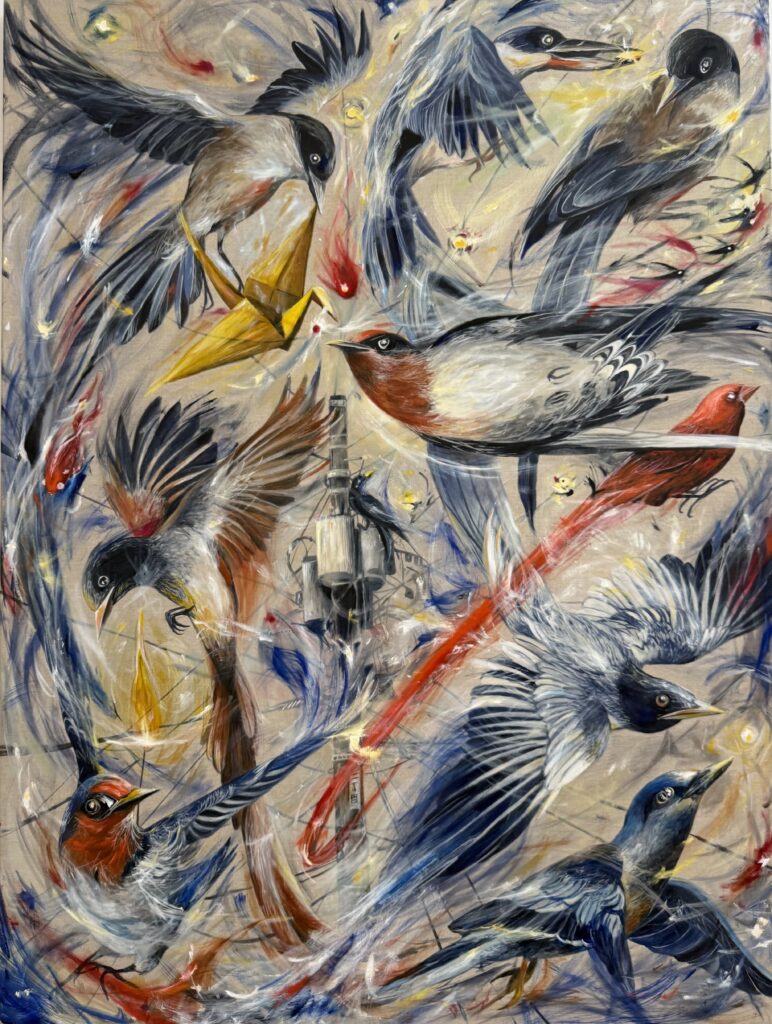
「Hatsune Wings: An Open Nest」は、Andrés Silva Vignoliが横浜でのレジデンス期間中、生活と制作の場としてきた初音町の小さな家を舞台に開催されます。本展では、この家そのものが展示空間であると同時に作品の主題となり、仮の住まい、スタジオ、アーカイブ、そして「巣」として一般に開かれます。
黄金町バザールのテーマ「At the Crossroads(交差点で)」に呼応し、本プロジェクトでは「巣」を、到着と出発のあいだにある場所として捉えます。巣は住むためにつくられますが、いつかはそこを離れることを前提とした場所でもあります。その意味で「巣」は、レジデンスという経験、そして移動によって形づくられる生のあり方を象徴するものとなります。それは、いつか失われることを意識しながら、一時的にその場所を自分の居場所にしようとする試みでもあります。
展示は、家の建築構造に沿って展開していきます。通りに面した部屋には、横浜滞在中に制作された作品を含む完成した絵画が展示されます。家の奥へ進むにつれて、展示と日常生活との境界は次第に曖昧になっていきます。写真作品、スケッチ、習作、書籍、制作のための資料、制作途中の作品などを通して、完成した絵画を取り巻く制作のプロセスやイメージが浮かび上がります。スタジオや生活空間そのものも展示の一部となり、よりプライベートな領域へと広がっていきます。
本プロジェクトには、鳥が繰り返し登場します。それは作品のモチーフであると同時に、移動、観察、帰属、そして居場所を離れることについて考えるための存在でもあります。「Hatsune Wings」というタイトルは、この家の名前と、日本語の「初音」——季節の最初の鳥の声を意味する言葉——にも重ねられています。翼は移動と旅立ちを、巣はそこに留まることと愛着を示します。本展は、その二つのあいだに存在しています。
レジデンスでの経験を、すでに完結したひとつの物語として再構成するのではなく、「Notes from a Nest」は、今なお続いている生活と制作の痕跡を提示します。絵画と写真、実験と参照資料、ものとイメージ、そして人前に現れる作品と、それらが生まれたプライベートな空間。それらがひとつの場所に共存します。
巣とは、ひとつの交差点です。そこは留まるためにつくられた場所であり、同時に、いつか旅立つためにつくられた場所でもあります。
Hatsune Wings: An open nest takes place inside the small house in Hatsunecho where Andrés Silva Vignoli has been living and working during his residency in Yokohama. For the exhibition, the house becomes both exhibition space and subject: a temporary home, studio, archive and nest opened to the public.
Responding to the Koganecho Bazaar theme At the Crossroads, the project considers the nest as a place between arrival and departure. A nest is built to be inhabited, but also eventually left behind. In this sense, it becomes a metaphor for the experience of a residency and for a life shaped by movement: a temporary attempt to make a place one’s own while remaining aware of its impermanence.
The exhibition unfolds through the architecture of the house. The street-facing room presents finished paintings, including works developed during the artist’s time in Yokohama. Moving further inside, the distinction between exhibition and everyday life gradually dissolves. Photographic works, sketches, studies, books, preparatory material and works in progress reveal the processes and images that surround the finished paintings. The studio and domestic spaces become part of the exhibition itself, extending into the more private areas of the house.
Birds recur throughout the project, both as subjects and as companions to ideas of migration, observation, belonging and displacement. The title Hatsune Wings also plays on the name of the house and on hatsune (初音), a Japanese word associated with the first birdsong of a season. Wings suggest movement and departure; the nest suggests dwelling and attachment. The exhibition exists somewhere between the two.
Rather than reconstructing the residency as a finished narrative, Notes from a Nest presents traces of a life and a practice still in progress: paintings and photographs, experiments and references, objects and images, the public work and the private space from which it emerged.
A nest is a crossroads: a place made for staying, and a place made to be left.
日程|9月10日(木)〜10月12日(月・祝)
時間|11:00〜19:00 ※木曜休場(9/10をのぞく)
場所| ハツネウィング D-2
Date|September 10 (Thu) – October 12 (Mon/Holiday)
Opening Hours|11:00–19:00 *Closed on Thursdays (except Sept. 10)
Venue| Hatsune Wing D-2
アーティスト
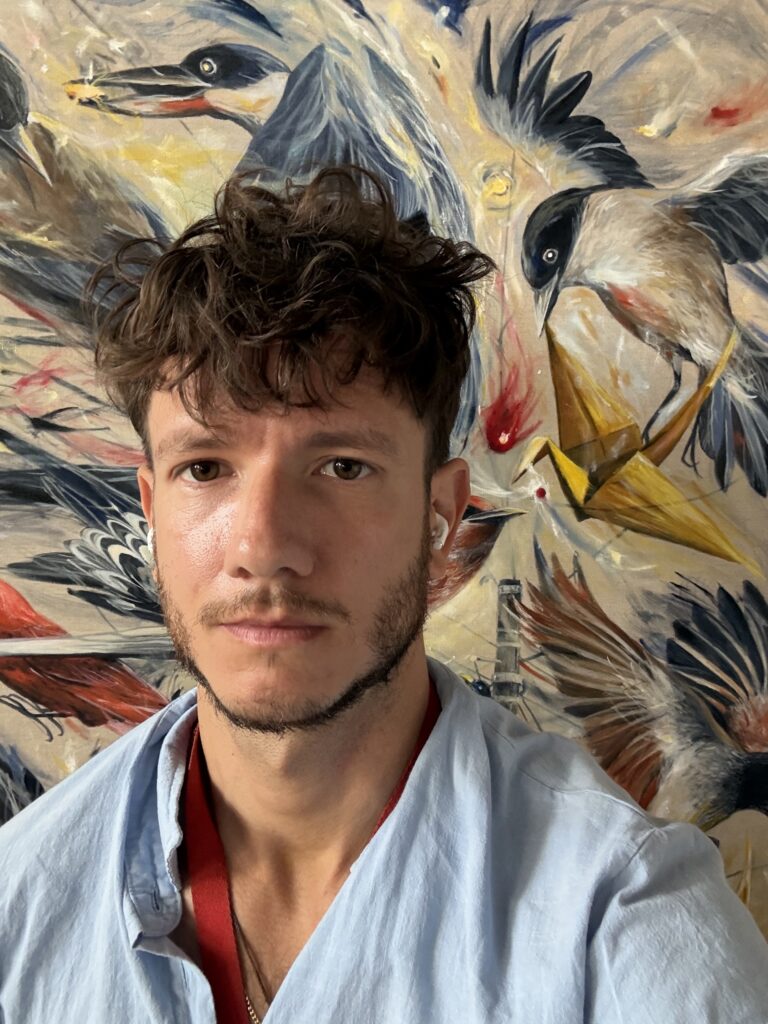
1987年パナマシティ生まれ。アンドレス・シルバ・ヴィニョーリは、フィレンツェ大学で建築を学んだ後、2025年にロンドンのロイヤル・カレッジ・オブ・アート(RCA)で絵画の修士課程を修了しました。現在はベルリンとロンドンを拠点に、主に絵画とドローイングを中心に制作しています。
生物多様性、移動、クィアネス、アイデンティティ、帰属をはじめ、依存、排除、喜び、欲望といったテーマを探求しています。制作の中心にあるのは、「場所の精神」を意味する「ゲニウス・ロキ(genius loci)」という考え方と、環境の中に歴史や記憶、さまざまな連想がどのように蓄積されていくのかという問いです。
鳥や動物、植物のかたち、日常的なものが作品の中に繰り返し登場し、個人的な経験と、それぞれの場所が持つ文化的・社会的・自然的な特徴とを結びつけています。
Born in Panama City in 1987, Andrés Silva Vignoli studied architecture at the University of Florence before completing an MA in Painting at the Royal College of Art in London in 2025. Based between Berlin and London, he works primarily with painting and drawing. His practice explores biodiversity, migration, queerness, identity and belonging, alongside themes of addiction, exclusion, joy and desire. Central to his work is the idea of genius loci, or the spirit of a place, and the ways environments accumulate histories, memories and associations. Birds, animals, botanical forms and everyday objects recur throughout his work, connecting personal experience with the cultural, social and natural character of specific places.
“Hatsune Wings: An Open Nest” will be held in a small house in Hatsune-cho, which served as Andrés Silva Vignoli’s living and working space during his residency in Yokohama.In this exhibition, the house itself serves as both the exhibition space and the subject of the artwork, opening to the public as a temporary residence, studio, archive, and “nest.”
Echoing the Koganecho Bazaar’s theme, “At the Crossroads,” this project conceives of the “nest” as a place situated between arrival and departure. While a nest is built for habitation, it is also a place premised on the idea that one will eventually leave it.In this sense, the “nest” symbolizes the experience of a residency and the way of life shaped by movement. It is also an attempt to temporarily make a place one’s own, while remaining conscious of the fact that it will someday be lost.
The exhibition unfolds along the architectural structure of the house. In the room facing the street, completed paintings—including works created during the artist’s stay in Yokohama—are displayed. As visitors move deeper into the house, the boundary between the exhibition and daily life gradually blurs.Through photographs, sketches, studies, books, reference materials, and works-in-progress, the creative process and imagery surrounding the completed paintings come to light. The studio and living spaces themselves become part of the exhibition, extending into more private realms.
Birds appear repeatedly in this project. They serve not only as motifs in the artwork but also as symbols that invite reflection on movement, observation, belonging, and leaving one’s home.The title “Hatsune Wings” overlaps with both the name of this house and the Japanese word “Hatsune”—which signifies the first birdcall of the season. Wings symbolize movement and departure, while a nest represents staying put and attachment. This exhibition exists between these two concepts.
Rather than reconstructing the experience of the artist residency as a single, completed narrative, “Notes from a Nest” presents traces of a life and creative process that continue to this day. Paintings and photographs, experiments and reference materials, objects and images, as well as works displayed in public and the private spaces where they were created—all coexist in a single place.
A nest is a crossroads. It is a place created for staying, yet at the same time, a place created for the journey that will one day begin.
Hatsune Wings: An Open Nest takes place inside the small house in Hatsunecho where Andrés Silva Vignoli has been living and working during his residency in Yokohama. For the exhibition, the house becomes both an exhibition space and a subject: a temporary home, studio, archive, and nest opened to the public.
Responding to the Koganecho Bazaar theme “At the Crossroads,” the project considers the nest as a place between arrival and departure. A nest is built to be inhabited, but is also eventually left behind. In this sense, it becomes a metaphor for the experience of a residency and for a life shaped by movement: a temporary attempt to make a place one’s own while remaining aware of its impermanence.
The exhibition unfolds through the architecture of the house. The street-facing room presents finished paintings, including works created during the artist’s time in Yokohama. As visitors move further inside, the distinction between the exhibition and everyday life gradually dissolves. Photographs, sketches, studies, books, preparatory materials, and works in progress reveal the processes and images that surround the finished paintings. The studio and domestic spaces become part of the exhibition itself, extending into the more private areas of the house.
Birds recur throughout the project, both as subjects and as companions to ideas of migration, observation, belonging, and displacement. The title *Hatsune Wings* also plays on the name of the house and on *hatsune* (初音), a Japanese word associated with the first birdsong of a season. Wings suggest movement and departure; the nest suggests dwelling and attachment. The exhibition exists somewhere between the two.
Rather than reconstructing the residency as a finished narrative, *Notes from a Nest* presents traces of a life and a practice still in progress: paintings and photographs, experiments and references, objects and images, the public work and the private space from which it emerged.
A nest is a crossroads: a place made for staying, and a place made to be left.
Dates|September 10 (Thu) – October 12 (Mon/Holiday)
Hours|11:00–19:00 *Closed on Thursdays (except Sept. 10)
Location| Hatsune Wing D-2
Date|September 10 (Thu) – October 12 (Mon/Holiday)
Opening Hours|11:00–19:00 *Closed on Thursdays (except Sept. 10)
Venue| Hatsune Wing D-2
Artist
Born in Panama City in 1987.After studying architecture at the University of Florence, Andrés Silva Vignoli completed a Master’s degree in painting at the Royal College of Art (RCA) in London in 2025. He is currently based in Berlin and London, where he creates works primarily focused on painting and drawing.
He explores themes such as biodiversity, mobility, queerness, identity, and belonging, as well as dependence, exclusion, joy, and desire.Central to her practice is the concept of “genius loci”—meaning “the spirit of a place”—and the question of how history, memory, and various associations accumulate within an environment.
The forms of birds, animals, and plants, as well as everyday objects, appear repeatedly in my work, linking personal experiences with the cultural, social, and natural characteristics of each place.
Born in Panama City in 1987, Andrés Silva Vignoli studied architecture at the University of Florence before completing an MA in Painting at the Royal College of Art in London in 2025. Based between Berlin and London, he works primarily with painting and drawing. His practice explores biodiversity, migration, queerness, identity, and belonging, alongside themes of addiction, exclusion, joy, and desire. Central to his work is the idea of genius loci—the spirit of a place—and the ways environments accumulate histories, memories, and associations. Birds, animals, botanical forms, and everyday objects recur throughout his work, connecting personal experience with the cultural, social, and natural character of specific places.