Andrés Silva Vignoli, *Hatsune Wings: An Open Nest* Ongoing
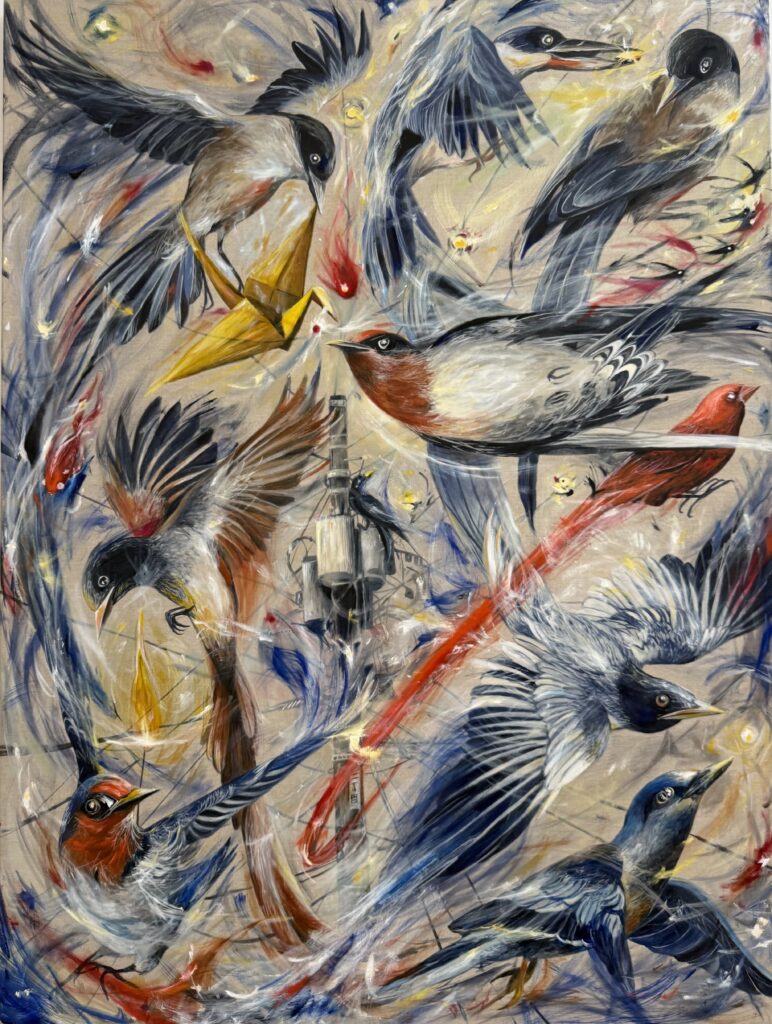
“Hatsune Wings: An Open Nest” will be held in a small house in Hatsune-cho, which served as Andrés Silva Vignoli’s living and working space during his residency in Yokohama.In this exhibition, the house itself serves as both the exhibition space and the subject of the artwork, opening to the public as a temporary residence, studio, archive, and “nest.”
Echoing the Koganecho Bazaar’s theme, “At the Crossroads,” this project conceives of the “nest” as a place situated between arrival and departure. While a nest is built for habitation, it is also a place premised on the idea that one will eventually leave it.In this sense, the “nest” symbolizes the experience of a residency and the way of life shaped by movement. It is also an attempt to temporarily make a place one’s own, while remaining conscious of the fact that it will someday be lost.
The exhibition unfolds along the architectural structure of the house. In the room facing the street, completed paintings—including works created during the artist’s stay in Yokohama—are displayed. As visitors move deeper into the house, the boundary between the exhibition and daily life gradually blurs.Through photographs, sketches, studies, books, reference materials, and works-in-progress, the creative process and imagery surrounding the completed paintings come to light. The studio and living spaces themselves become part of the exhibition, extending into more private realms.
Birds appear repeatedly in this project. They serve not only as motifs in the artwork but also as symbols that invite reflection on movement, observation, belonging, and leaving one’s home.The title “Hatsune Wings” overlaps with both the name of this house and the Japanese word “Hatsune”—which signifies the first birdcall of the season. Wings symbolize movement and departure, while a nest represents staying put and attachment. This exhibition exists between these two concepts.
Rather than reconstructing the experience of the artist residency as a single, completed narrative, “Notes from a Nest” presents traces of a life and creative process that continue to this day. Paintings and photographs, experiments and reference materials, objects and images, as well as works displayed in public and the private spaces where they were created—all coexist in a single place.
A nest is a crossroads. It is a place created for staying, yet at the same time, a place created for the journey that will one day begin.
Hatsune Wings: An Open Nest takes place inside the small house in Hatsunecho where Andrés Silva Vignoli has been living and working during his residency in Yokohama. For the exhibition, the house becomes both an exhibition space and a subject: a temporary home, studio, archive, and nest opened to the public.
Responding to the Koganecho Bazaar theme “At the Crossroads,” the project considers the nest as a place between arrival and departure. A nest is built to be inhabited, but is also eventually left behind. In this sense, it becomes a metaphor for the experience of a residency and for a life shaped by movement: a temporary attempt to make a place one’s own while remaining aware of its impermanence.
The exhibition unfolds through the architecture of the house. The street-facing room presents finished paintings, including works created during the artist’s time in Yokohama. As visitors move further inside, the distinction between the exhibition and everyday life gradually dissolves. Photographs, sketches, studies, books, preparatory materials, and works in progress reveal the processes and images that surround the finished paintings. The studio and domestic spaces become part of the exhibition itself, extending into the more private areas of the house.
Birds recur throughout the project, both as subjects and as companions to ideas of migration, observation, belonging, and displacement. The title *Hatsune Wings* also plays on the name of the house and on *hatsune* (初音), a Japanese word associated with the first birdsong of a season. Wings suggest movement and departure; the nest suggests dwelling and attachment. The exhibition exists somewhere between the two.
Rather than reconstructing the residency as a finished narrative, *Notes from a Nest* presents traces of a life and a practice still in progress: paintings and photographs, experiments and references, objects and images, the public work and the private space from which it emerged.
A nest is a crossroads: a place made for staying, and a place made to be left.
Dates|September 10 (Thu) – October 12 (Mon/Holiday)
Hours|11:00–19:00 *Closed on Thursdays (except Sept. 10)
Location| Hatsune Wing D-2
Date|September 10 (Thu) – October 12 (Mon/Holiday)
Opening Hours|11:00–19:00 *Closed on Thursdays (except Sept. 10)
Venue| Hatsune Wing D-2
Artist
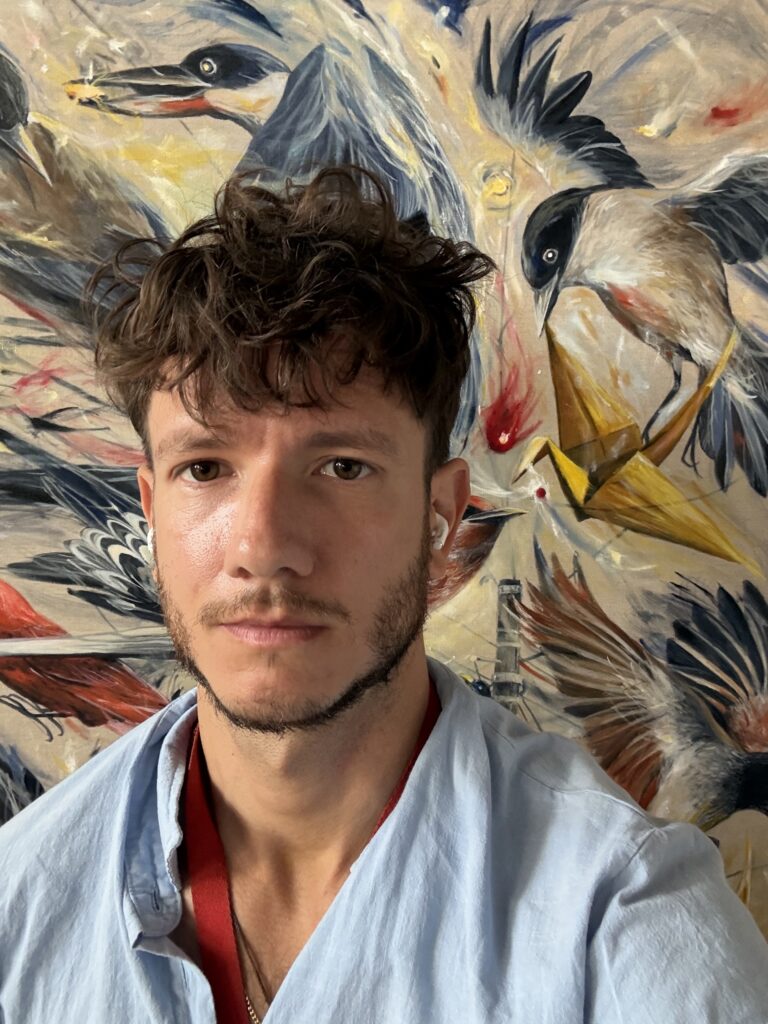
Born in Panama City in 1987.After studying architecture at the University of Florence, Andrés Silva Vignoli completed a Master’s degree in painting at the Royal College of Art (RCA) in London in 2025. He is currently based in Berlin and London, where he creates works primarily focused on painting and drawing.
He explores themes such as biodiversity, mobility, queerness, identity, and belonging, as well as dependence, exclusion, joy, and desire.Central to her practice is the concept of “genius loci”—meaning “the spirit of a place”—and the question of how history, memory, and various associations accumulate within an environment.
The forms of birds, animals, and plants, as well as everyday objects, appear repeatedly in my work, linking personal experiences with the cultural, social, and natural characteristics of each place.
Born in Panama City in 1987, Andrés Silva Vignoli studied architecture at the University of Florence before completing an MA in Painting at the Royal College of Art in London in 2025. Based between Berlin and London, he works primarily with painting and drawing. His practice explores biodiversity, migration, queerness, identity, and belonging, alongside themes of addiction, exclusion, joy, and desire. Central to his work is the idea of genius loci—the spirit of a place—and the ways environments accumulate histories, memories, and associations. Birds, animals, botanical forms, and everyday objects recur throughout his work, connecting personal experience with the cultural, social, and natural character of specific places.