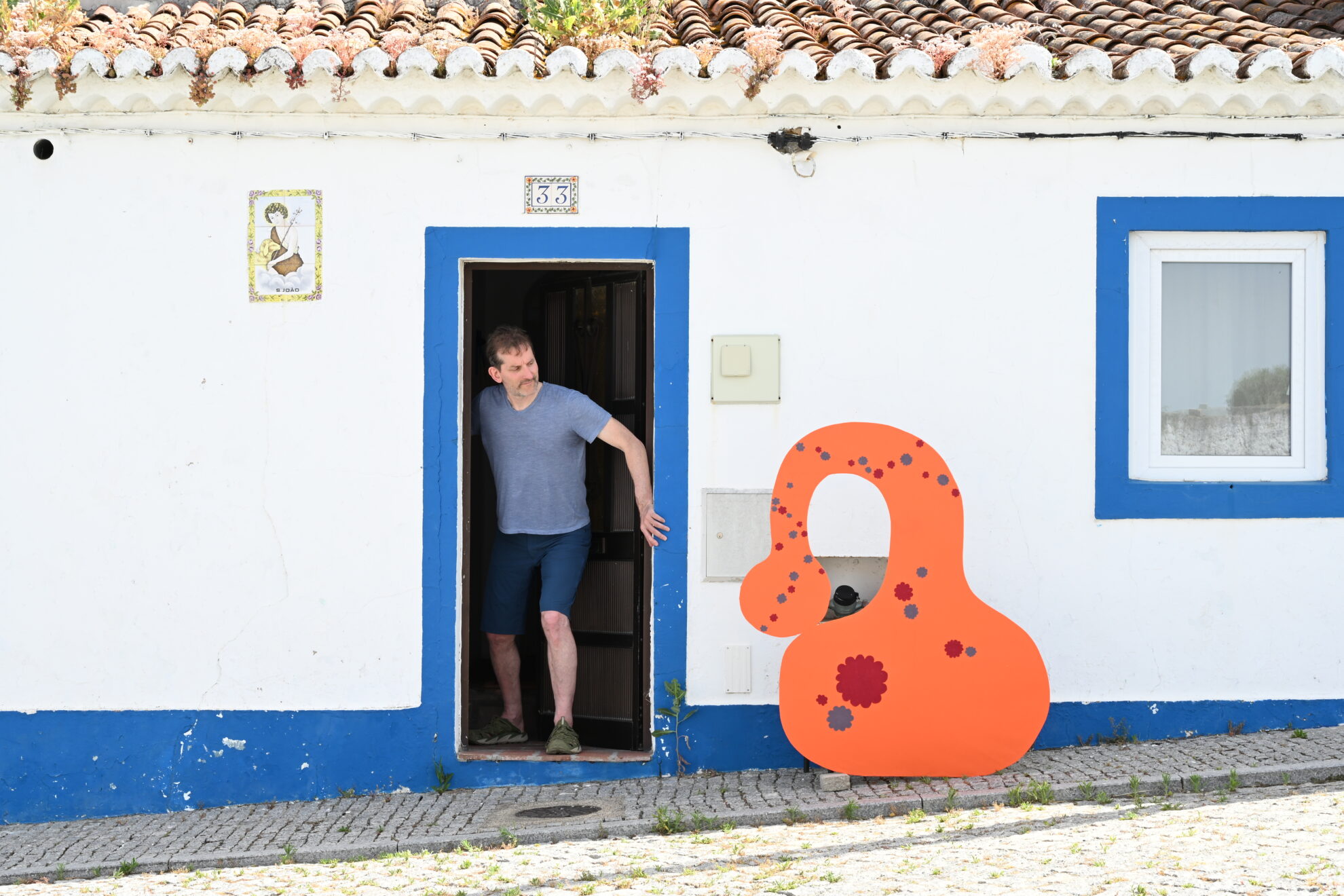
私は昨年の4月~6月にかけてポルトガルのBuinho Fablabに招待され8年ぶりにBuinho Residencyのあるメセジャナ(Messejana)に滞在しました。
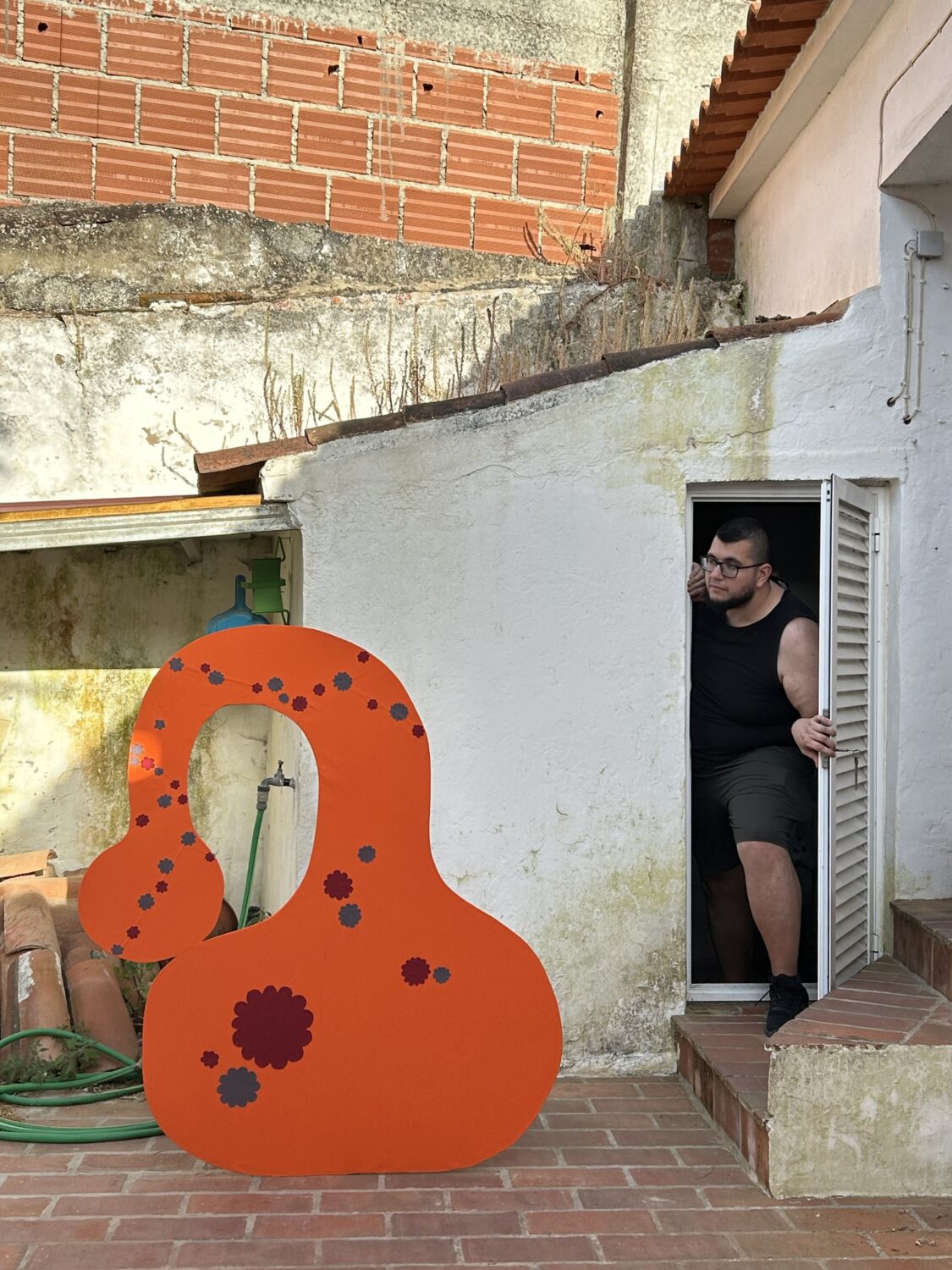
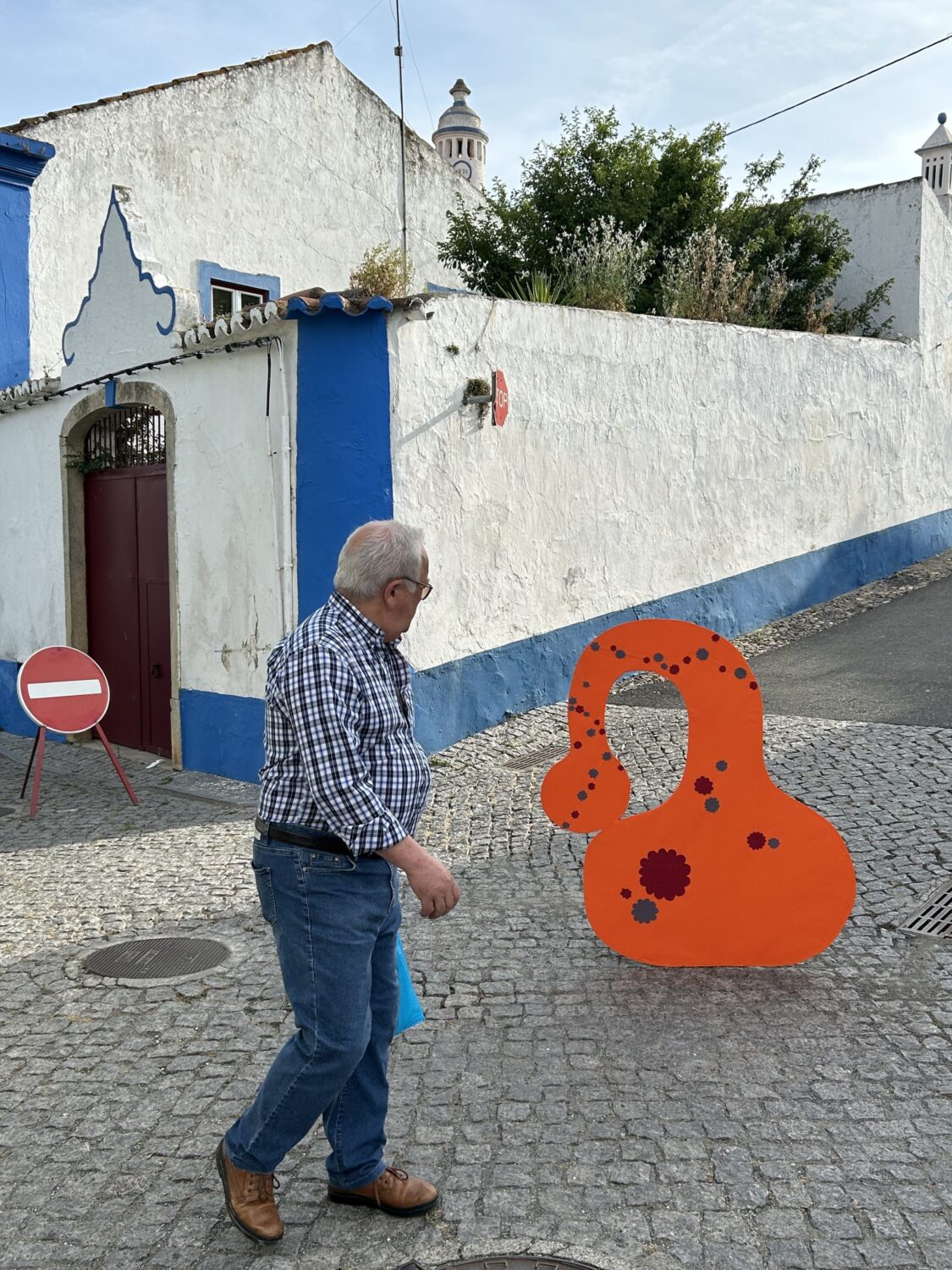
私がポルトガルに来た目的の一つはメセジャナの風景と人々や犬、猫などと私が作った有機的な形のオブジェと一緒に写真を撮るためです。黄金町で行った鍵穴プロジェクトをこちらでも行うつもりでしたが、メセジャナの風景の中では白い鍵穴の家は目立ちにくく村人のおおらかさやこれまでの村のたどってきた道を表現できる、別の形を模索していました。その考えを形にしたのが今回の有機的な形です。そして平面で有機的な終わりのない形を使って異空間を作る作業はわたしが昔描いていた平面作品の重要な課題でもあり、ポルトガルの国の歴史の中で生きている村人の日常を掬い取る作業でもあります。風景の中に現れた有機的な形は奇妙であり、周りの風景も、中央の有機的な形の穴と同じ空間にあるはずですが異空間のように見えます。これを写真に撮ることで普段見慣れた風景の中に、新たな視点を見つけることができます。そのことは日常生活におけるものの見方にも反映されると思います。さらにオブジェを置いた風景写真をプリントアウトすることによって見えてくる、思いもよらない風景のなかの抽象的な絵画空間や視線を誘導させるような意図しなかった構図、図と地の反転、強い光によってできる影のかたちの面白さに驚かされました。
From April to June last year, I was invited to Buinho Fablab in Portugal and stayed in Messejana, where the Buinho Residency is located, for the first time in eight years.
One of my purposes in coming to Portugal was to take photographs of the landscapes of Messejana together with the people, dogs, cats, and the organically shaped objects I created. I had originally planned to carry out the Keyhole Project, which I had previously realized in Koganecho, but within the landscape of Messejana, the white keyhole-shaped house did not stand out clearly. I therefore began searching for a different form—one that could better express the villagers’ openness and generosity, as well as the path the village has taken over time. This process led to the creation of the organic forms presented in this project.
Working with flat, organic, endless shapes to construct an “other space” has also been an important theme in my earlier two-dimensional works. At the same time, this process functions as an attempt to capture fragments of the everyday lives of villagers living within Portugal’s historical context.
The organic forms that appear within the landscape are strange and uncanny. Although the surrounding scenery exists in the same space as the hole at the center of the organic form, it appears as if it belongs to a different dimension. By photographing these scenes, it becomes possible to discover new perspectives within landscapes that are otherwise familiar. I believe this experience can also influence how we perceive objects and scenes in our everyday lives.
Furthermore, by printing the photographs of landscapes containing the objects, I was surprised to discover unexpected abstract pictorial spaces emerging within the scenery, unintended compositions that guide the viewer’s gaze, reversals between figure and ground, and the fascinating shapes of shadows created by strong light.
開催概要 Exhibition Details
日程|2月20日(金)〜3月8日(日)※月曜日休場日
時間|13:30〜19:00
場所|GALA House(横浜市中区黄金町1丁目6−4)
アーティスト|宇田見飛天
入場料|無料
Date|February 20 (Fri) – March 8 (Sun) ※Closed on Mondays
Opening Hours|13:30〜19:00
Venue|GALA House (1-6-4 Koganecho, Naka-ku, Yokohama)
Artist|HITEN UTAMI
Admission|Free
アーティスト
宇田見飛天/HITEN UTAMI
ホルベインスカラシップ,装画を描くコンペティショングランプリ,ART TODAYなどを経て、美術館で多数のワークシップを行う。コロナ前の10年は海外のアーティストインレジデンスに毎年出かけパブリックスペースにコラージュペインティングを制作し,ワークシップ行う。2024年から黄金町AIRに参加。
After receiving the Holbein Scholarship, the Grand Prix Drawing Competition, and ART TODAY, she has held numerous workshops at art museums. For the past 10 years before the coronavirus, I went to artist-in-residences overseas every year, creating collage paintings and conducting workshops in public spaces. Participating in Koganecho AIR from 2024 year.