どこかで、何らかの形で、何かであることの奇妙さ
「彼は、その感情を今まさに初めて発見したかのように感じ、自らの感情の予測不可能性に驚いた。」
――三島由紀夫の小説『午後の曳航』より。
舞台は横浜。
小説の終盤、ある登場人物が、かつて訪れたことのない場所へと歩みを進めている。記憶や疑問が彼の脳裏を駆け巡り――そこには、ある種の予感に満ちた喜びがあった。
ニコル・ファーンにとって、歩くことは時間の経過を刻む行為だった。自宅のアパートから日ノ出町駅へ、あるいは毎月行われる黄金町の近隣パトロール中、街中のどこへ行くにせよ、時間は定まっていた――しかし同時に不規則で、曖昧でもあった。神経多様性を持つ人にとって、時間と空間は異なる様相を呈する。時には、一枚の葉やゴミが、何日も、あるいは何週間も同じ場所に留まっていることがあった。それにとって、時間は止まっているのだろうか?
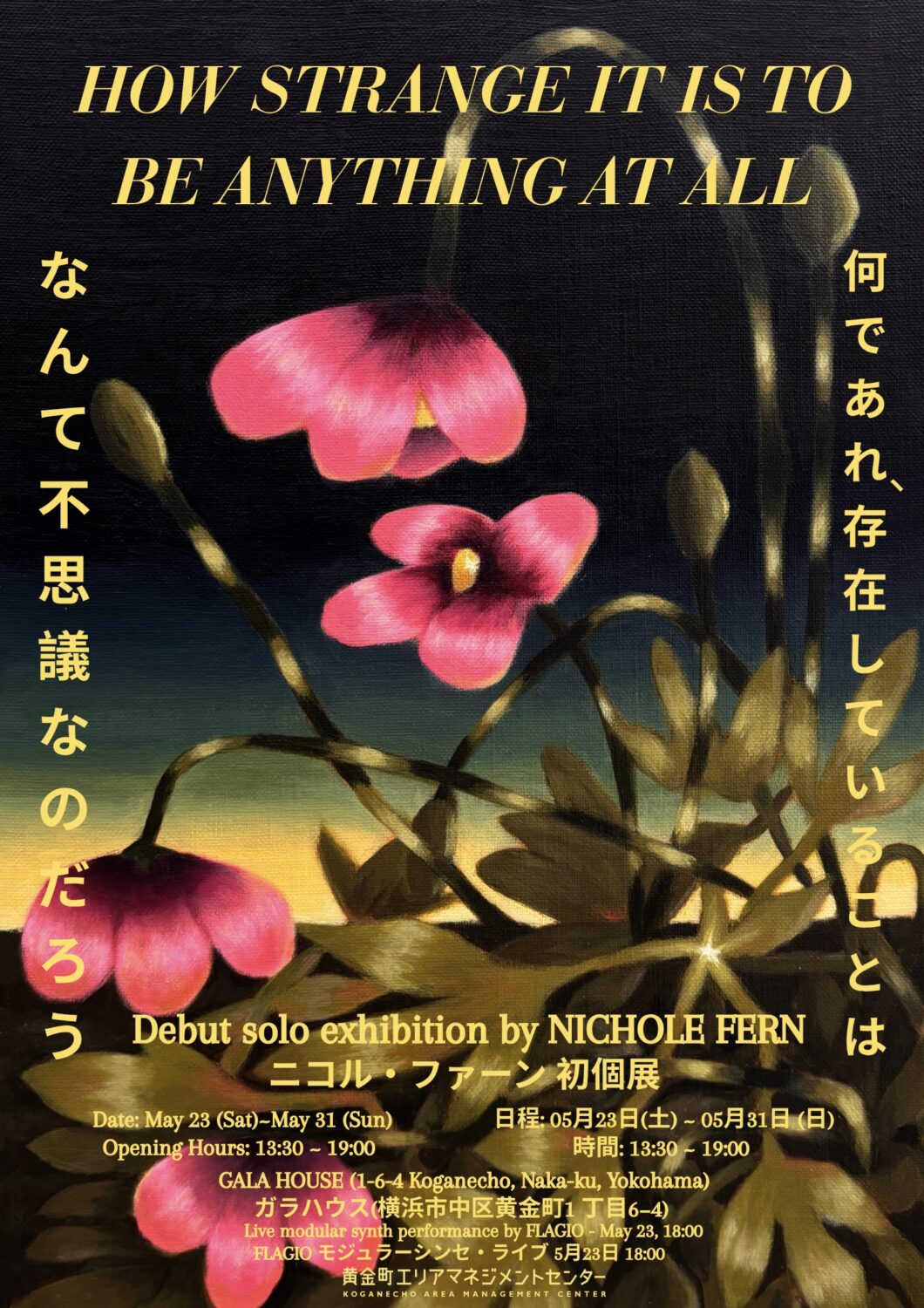
彼女の散歩中には、夕暮れと夜明けの絶え間ない追いかけっこの間に捉えられた、ある種の断片的な光景が際立っていた。小さくとも現実的。儚く、しばしば見過ごされながらも、紛れもなくそこにあり――無視することは不可能だった。彼女はそれらを、解読不能な言語のように捉えていた。それは、規定する以上のものを表現し――結局のところ、完全な理解を逃れるものだった。それらは植物に似ていたが、むしろ内なる感覚の表れに近かった。単純で写実的な描写というよりは、凝縮され、形を変えられ、あるいは再想像されたものだった。不安もまた創造を生む。それは過度の自覚、つまり知覚の鋭敏さを育む。その光景は些細なものだが、アーティストの心には指数関数的に重くのしかかる。それらは問いとなり、未知の意味との連想となる。しかし同時に、その儚さを認めつつも、美を体現しているのだ。
これらに執着し、絵画へと変換することは、個人的な時間の記録となる。日記のページのように、それらはかつて何かが存在したことを優しく証明するものだ。ここでもまた、過度の自覚が働いている。絵画とは、特定の期間に存在し、二度と同じものにはならないが、同時に時間が存在する限り常に同じであり続けるという、ある種のパラドックスである。アンネ・フランクの日記を思い起こしてほしい。
日本での生活体験は極めて独特だ。それは実用的なだけでなく、実に興味深い。人々はいつでもどこへでも歩いて行く。横浜を歩き回って感じることは、高齢者のどこか物悲しい、静かな存在感だ。それはひいては、私たち全員がたどり着く先、誰も逃れられない死を静かに思い出させる。それぞれのキャンバスは、見知らぬものと馴染み深いものの間の分岐点となる。それぞれのキャンバスは、日常のありふれた光景を、まるで人生で初めて目にするかのように、異質なものと捉え直すきっかけを与えてくれる。
「もののあわれ」とは、一般的に「時の移ろい」と理解される日本の概念であり、「花火」や「花見」といった行いの背後にある静かな動機と考えられている。崇高な美しさは存在し、私たちの注意を惹きつけるが、最終的には消え去ってしまう。これらの作品は総じて、根本的かつ極めて重要な問いを投げかけている。たとえ束の間であっても、存在することとは一体何を意味するのか?
季節の移ろいや、人生のあらゆる段階を経ていくように、存在とは現実のものであると同時に、絶対的な言葉で定義することは難しい。こうした不安はあるものの、かつて自分がいた場所や行ったことの痕跡を残せるという事実こそが、生きる価値のあることなのかもしれない。
– フランシスコ・ジン・ソン・リー、2026年
The Strangeness of Being Something Somewhere Somehow
“It seemed to him that he was discovering the emotion for the first time, and he was surprised at the unpredictability of his affections.”
– from The Sailor Who Fell from Grace with the Sea,
a novel by Mishima Yukio, set in Yokohama.
Towards the end of the novel, one of the characters is walking towards a place he had never been. Memories and questions rushed through his mind — there was some kind of foreboding joy.
For Nichole Fern, walking marked the passing of time. From her apartment to Hinodecho train station, or during monthly neighborhood patrols around Koganecho, to anywhere around the town, time was fixed — but also irregular, ambiguous. Time and space presents differently for a neurodivergent person. Sometimes a leaf or a piece of trash would be in the same spot for days or weeks. Did time stop for it?
Certain vignettes stood out during her walks, stuck in a perpetual game of tag between dusk and dawn. Small, but still real. Fragile, often overlooked, yet existent – impossible to ignore. She perceives them like an undeciphered language, one that expresses more than it dictates – overall evading a complete understanding. Despite looking like plants, they were more of expressions of inner senses: reduced, reshaped, or reimagined rather than straightforward, realistic depictions. Anxiety also creates. It allows for a hyperawareness, a heightened sense of perception. As minute as the vision is, it weighs exponentially more on the artist’s mind. They become an inquiry, an association with an unknown meaning but also knowing beauty while being aware of its fragility.
Fixating on these and translating them into paintings serve as a personal timekeeping. Like pages from a diary, they are gentle proof that something once existed. Again, a hyperawareness. Painting is a paradox of something that existed over a specific period of time, never to be the same again, but at the same time always the same for as long as time exists. Consider the diary of Anne Frank.
The experience of living in Japan is remarkedly unique: it is as entertaining as it is functional. People walk everywhere, all the time. The thing about walking around in Yokohama is the somehow melancholic, silent presence of the elderly. In turn it is a quiet reminder of where we will all be, of a mortality that no one escapes. Each canvas then serves as a crossroads between the unfamiliar and the familiar. Each canvas invites a reset, to see the mundane everyday as alien, as if one has seen it for the very first time in their lives.
“Mono no aware” is a Japanese concept that is commonly understood as “the passing of time” and is thought of as the quiet motivation behind activities such as “hanabi” or cherry blossom viewing. Sublime beauty exists, it gets our attention, but then ultimately disappears. Altogether the works posit a rudimentary, vital question: what does it mean to exist… albeit briefly?
Like the changing of seasons, changing through all walks of life; existing is both real, but difficult to explain in absolute terms. Despite this anxiety, that we leave traces of where we used to be, what we used to do is perhaps something worth being alive for.
– Francisco Jin Sung Lee, 2026
●開催概要 Outline
日程|05月23日(土)〜05月31日(日)
時間|13:30〜19:00
場所|GALA HOUSE (横浜市中区黄金町1 丁目6−4)
アーティスト|ニコル・ファーン
入場料|無料
Date|May 23 (Sat) 〜 May 31 (Sun)
Opening Hours|13:30〜19:00
Venue|GALA HOUSE
Artist|Nichole Fern
Admission|Free
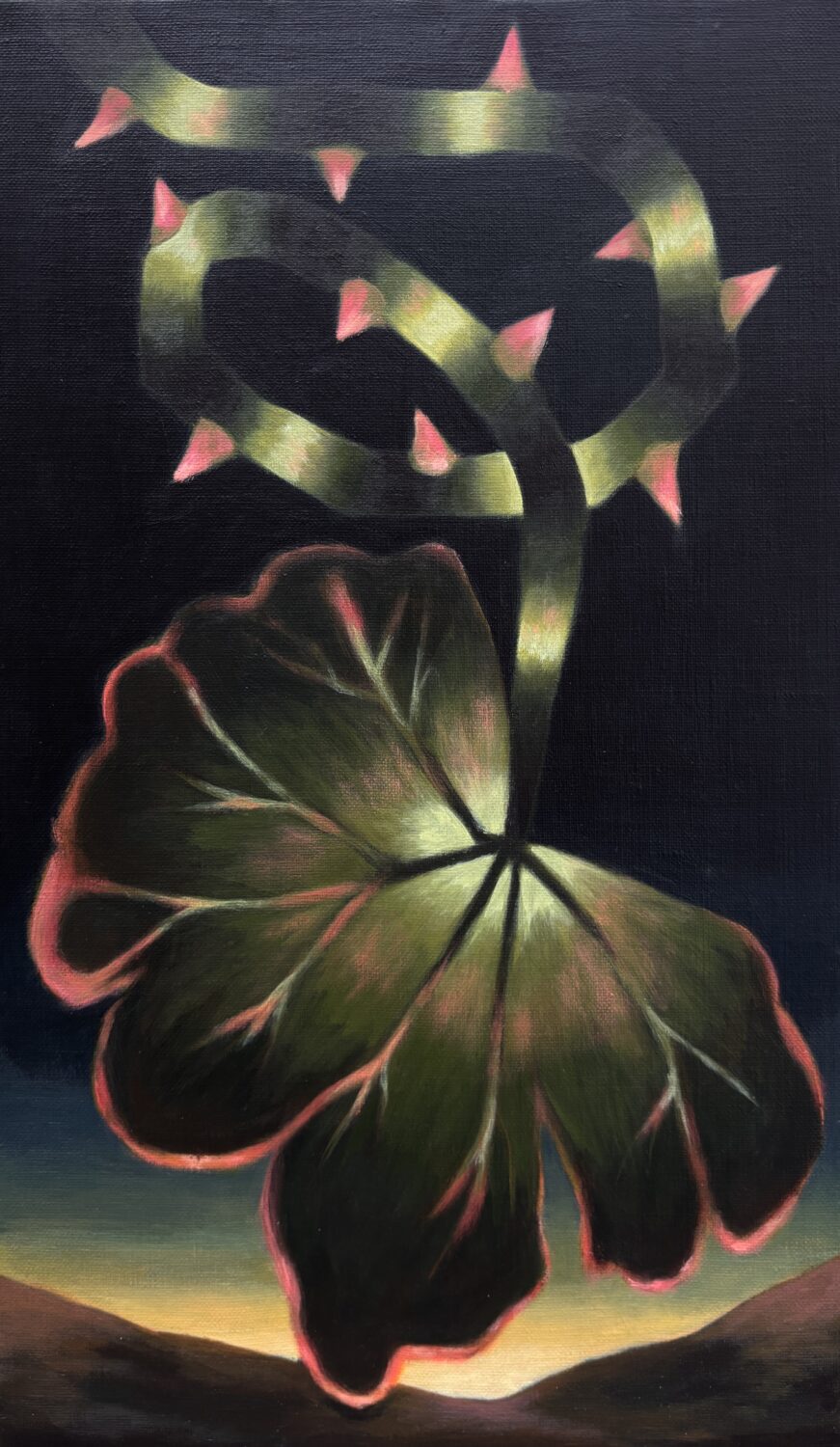
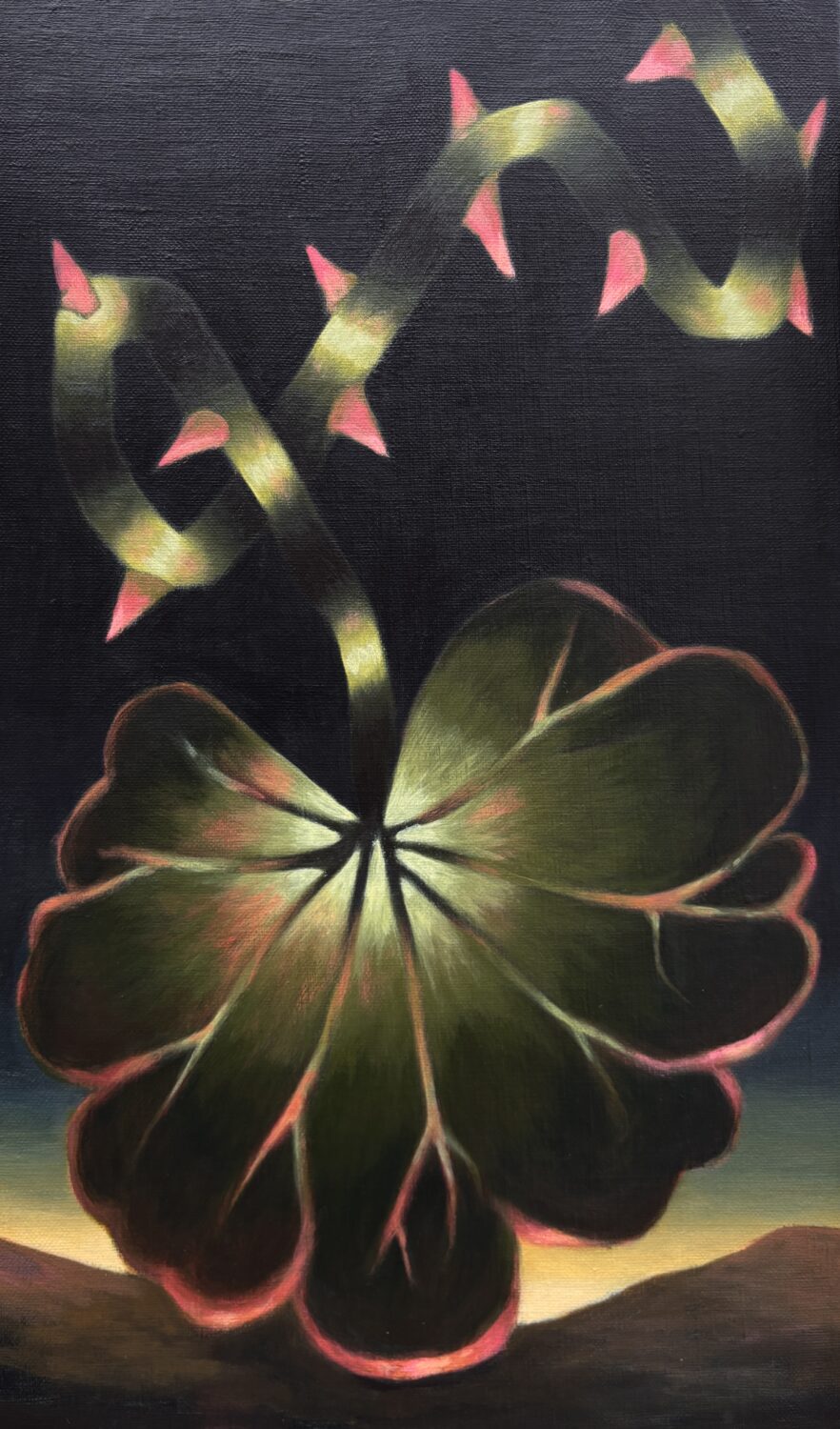
Hinodecho Path I、II
41 cm x 24.2 cm
Acrylic on canvas
2026