토크 이벤트
"The NEO-KOSHIN Project": What Exactly Is a Koshin Tower? From Stone Monuments to a Network Transcending Time and Space Ended
- 전시 기간
- 2026.9.26
- 시간
- 3:00 PM–5:00 PM
- 행사장
- Site-D Beneath the Railways Community Hall
- 입장료
- Free
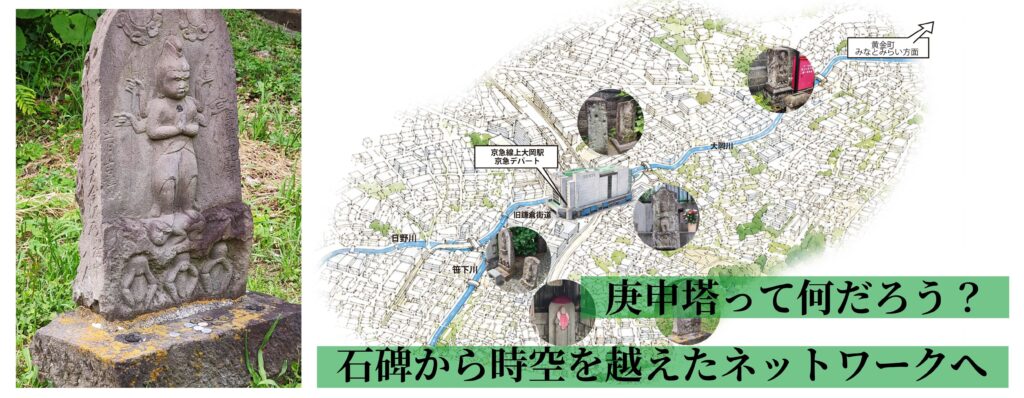
Right next to Keikyu Department Store—one of the venues for this exhibition—remains a “memory of the road” that dates back to the Edo period.
Numerous Koshin-to stone monuments still stand along the former routes—the path leading from Kamiooka along the Ooka River toward Kanazawa Hakkei, and the route connecting beyond Gomeiji to the old Tokaido Highway. Koshin-to are stone monuments erected primarily during the Edo period as local communities gathered to foster their faith and social bonds.Each one features unique designs and motifs, such as Aomuen Kongo trampling evil spirits or the “Three Wise Monkeys”—see no evil, speak no evil, hear no evil. These monuments convey to the present day the faith, interactions, prayers for the safety of travelers, and the collective memory of the people who once lived in this area.
In this talk, archaeologist Hiroyuki Ishigami and artist Taki Kentaro will use the Koshin-to as a starting point to discuss the connections among the people who once lived in this area and the memories etched into the town.What were the circumstances behind the creation of these ancient stone monuments, and how were they connected to people’s daily lives and their journeys along the roads? As we reflect on the lives of people from the past, we will consider how these monuments connect to the town today.
Date | Saturday, September 26, 2026 Time | 3:00 PM – 5:00 PM
Venue|Site-D Beneath the Railways Community Hall
Speakers|Hiroyuki Ishigami (Archaeologist, Kyoto University of the Arts), Taki Kentaro (Artist, Department of Art, Tokai University)
Capacity|40 people
Admission|Free
Reservations|Please register via Peatix. (Walk-ins welcome)
Note|Present your Koganecho Bazaar 2026 ticket at the venue reception desk to receive an “Original NEO-KOSHIN Sticker”!
Speaker Profile|
Hiroyuki Ishigami
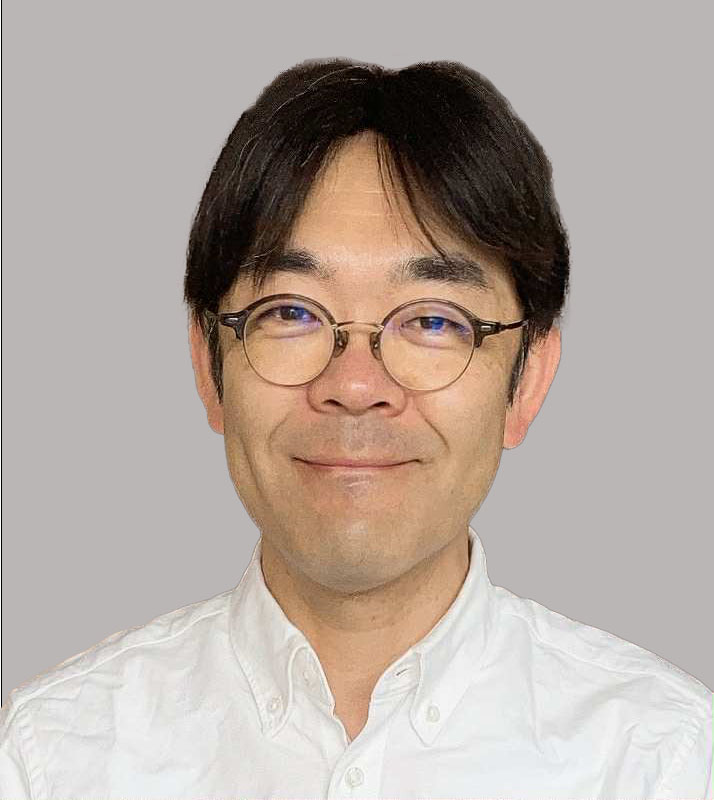
Born in Kanagawa Prefecture in 1973 and raised in Chiba Prefecture. In 2005, he withdrew from the doctoral program at Keio University’s Graduate School of Letters after completing the required coursework. In 2006, he received his Ph.D. in History from Keio University. After serving as an associate professor in the Faculty of Letters at Keio University, he assumed his current position.While engaged in archaeological excavations associated with urban redevelopment projects in Tokyo’s wards and surveys of stone structures in the Kanto region, he has witnessed firsthand archaeological sites being destroyed after excavation and stone Buddha statues buried by the roadside and forgotten. This has led him to pursue research focused on developing methodologies for preserving and utilizing such cultural heritage within local communities.His publications include *The Archaeology of Early Modern Koshin-to* (Keio University Press, 2013) and *Encyclopedia of Archaeological Sites in Japan’s 47 Prefectures* (Maruzen Publishing, 2018).
Taki Kentaro
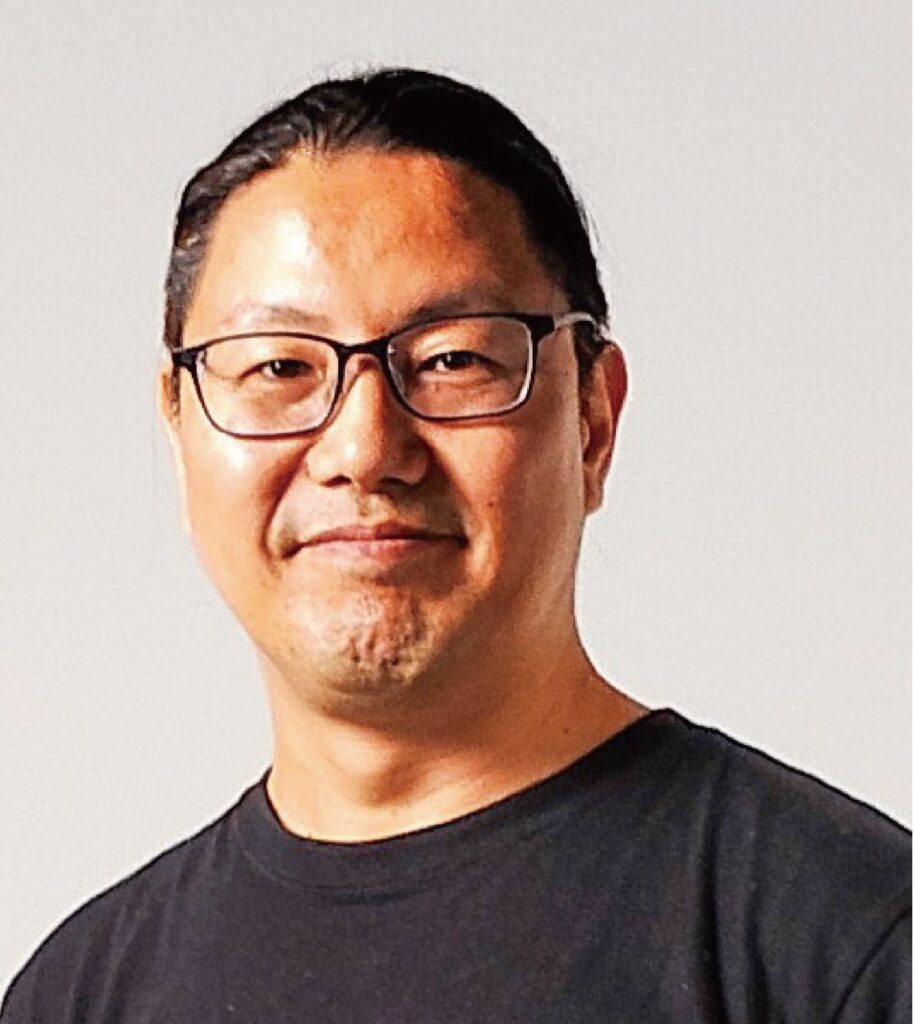
Born in Osaka Prefecture in 1973. Based at his studio in Koganecho, he creates projection works, optical objects, installations, and performances in urban spaces, in addition to organizing workshops and exhibitions. Major exhibitions he has participated in include “ART OSAKA 2025 Video Program: ‘Reflection’ and“Seeing”—Exploring Video Expression: From the 1960s to the Present” (2025, Osaka City Central Public Hall, Grand Assembly Hall), “CIRCUITO CERRADO” (2026, Calme Center for Contemporary Culture, Valencia, Spain), and many others.His published works include *Krzysztof Wodiczko: An Ambivalent Memory Device* (published by Republic, 2026).
What Is a Koshin Stone Monument?
From Stone Monuments to Networks Across Time and Space
Just near one of the exhibition venues, Keikyu Department Store, traces of an old road dating back to the Edo period can still be found.
Along the former routes from Kami-Ooka toward Kanazawa-Hakkei following the Ooka River, as well as the route connecting the area beyond Gumyoji to the old Tokaido Road, numerous Koshin stone monuments remain today. Erected primarily during the Edo period, these monuments were created by local communities as people gathered to share beliefs and foster social connections.
The designs and motifs vary from monument to monument. Some feature Shomen Kongo, a deity depicted trampling an evil spirit, while others feature the familiar Three Wise Monkeys—“see no evil, hear no evil, speak no evil.” These monuments preserve traces of the beliefs and social connections of people who once lived in the area, as well as their prayers for the safety of travelers and the memories of the communities themselves.
In this talk, archaeologist Hiroyuki Ishigami and artist Kentaro Taki explore the connections between the people who once lived in this area and the memories embedded in the city, using Koshin stone monuments as a starting point. How were these monuments created, and what role did they play in people’s daily lives and journeys along the roads? By reflecting on the lives and activities of people in the past, the talk examines how these historical traces continue to connect with the city today.
Date & Time
September 26, 2026 (Sat.) 3:00–5:00 p.m.
Venue
Site-D Community Space, Koganecho Underpass Studio
Speakers
Hiroyuki Ishigami
Archaeologist, Kyoto University of the Arts
Kentaro Taki
Artist, Department of Art, Tokai University
Capacity|40 people
Admission|Free
Reservation|Please register via Peatix. Same-day registration is also available.
Special Gift: Visitors who present a Koganecho Bazaar 2026 ticket at the reception will receive an original NEO-KOSHIN sticker.
Speakers’ Profiles|
Hiroyuki Ishigami
Born in Kanagawa Prefecture in 1973 and raised in Chiba Prefecture. Ishigami withdrew from the doctoral program at the Graduate School of Humanities, Keio University, in 2005 after completing the required coursework, and received his Ph.D. in History from Keio University in 2006. After serving as an associate professor at the Faculty of Letters, Keio University, among other positions, he currently holds his present position.
Through his work on archaeological excavations associated with urban redevelopment in Tokyo’s wards and surveys of stone monuments in the Kanto region, Ishigami has witnessed archaeological sites being destroyed after excavation, as well as stone Buddhist statues and other monuments buried along roadsides and gradually forgotten. These experiences have led him to pursue research into methods for preserving and utilizing such cultural heritage within local communities.
His publications include *The Archaeology of Early Modern Koshin Stone Monuments* (Keio University Press, 2013) and *An Encyclopedia of Archaeological Sites in Japan’s 47 Prefectures* (Maruzen Publishing, 2018).
Kentaro Taki
Born in Osaka Prefecture in 1973. Based at his studio in Koganecho, Taki creates projection works, optical objects, installations, and performances in urban spaces, while also organizing workshops and exhibitions.
His recent exhibitions and projects include “What Is Projected and What Is Seen — Exploring Moving Image Expression from the 1960s to the Present,” the video program at ART OSAKA 2025 (Osaka City Central Public Hall, 2025), and “CIRCUITO CERRADO” at the Centre del Carme Cultura Contemporània in Valencia, Spain (2026).
His publications include *Krzysztof Wodiczko: Ambivalent Memory Devices* (Republic, 2026).