TQ_Hisami Takesawa BLUE hour Window Upcoming
BLUE hour Window
The “Blue Hour” is a brief period that occurs around sunset, between day and night. Along the window of a studio
beneath the railways, various media—including projections onto tapestries and monitor screens of various sizes—are arranged.
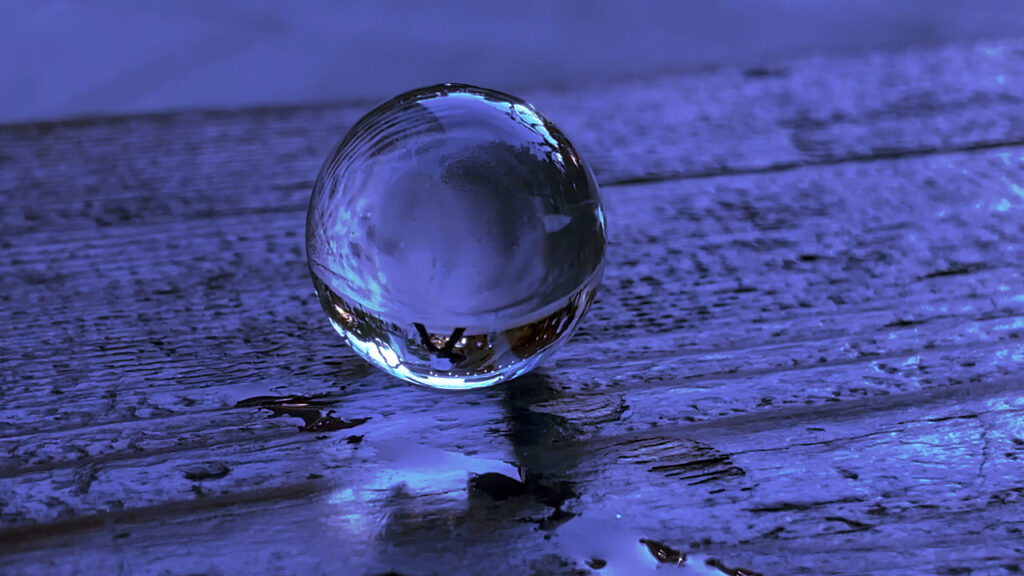
The transparent, soft sphere is an open camera obscura. Through the illusion that the viewer’s own eyeball is placed there, one “touches” the landscape.
As twilight gives way to night and the balance between natural light and indoor lighting shifts, the reflections on the glass door gradually fade, allowing the images inside to emerge. The way they appear changes slightly depending on sunlight and seasonal conditions. If you might encounter a different expression each time you pass by, I hope you’ll come back again and again—just as you would to gaze at the moon.
BLUE hour Window
“Blue hour” is the brief interval between day and night, around sunset.
Along the window of a studio facing a passageway beneath the elevated railway, projections onto a tapestry and moving images on monitors of various sizes are arranged as different media.
A soft, transparent sphere serves as an open camera obscura. Through the illusion that the viewer’s own eyeball has been placed there, it becomes possible to experience the landscape through sight.
As evening turns to night and the balance between natural and interior light shifts, reflections on the glass door gradually fade and the images inside begin to emerge. Their appearance changes subtly with the conditions of daylight and the seasons. If a different expression can be encountered each time one passes by, I hope people will return again and again, just as they might return to gaze at the moon.
The exhibition is conceived as a work in progress. Throughout the exhibition period, it will continue to evolve through changes in lighting and subjects, and through the addition of objects.
Dates|September 19 (Sat) – October 12 (Sun)
Hours|Recommended
viewing time: About one hour before sunset until dawn*In Yokohama, sunset times in September range from approximately 6:10 p.m. in early September to approximately 5:30 p.m. by the end of the month.
Location | Hachibankan Studio (2-42-3 Hatsune-cho, Naka-ku, Yokohama)
*Due to the limited size of the exhibition space, we will not be holding an open studio; however, I plan to be present outside the door on the day of the Nokisaki Art Fair.
Dates | September 19 (Sat) – October 12 (Sun)
Recommended viewing hours | From about one hour before sunset until dawn
. In Yokohama, sunset shifts from around 6:10 p.m. in early September to around 5:30 p.m. by the end of the month.
Venue | Hachibankan Studio
, 2-42-3 Hatsunecho, Naka-ku, Yokohama
. Due to limited space inside the studio, visitors will not be able to enter, and there will be no open studio sessions. However, I am considering being present outside the studio during the Nokisaki Art Fair.
Artist
TQ_Hisami
Takesawa Using inverted images and visual perception as starting points, I create works that employ light, video, and transparent materials.I am interested in the optical phenomenon—common to both the human eye and the camera obscura—where “images are inverted and focused.” I gather reflections, transmissions, and inverted images hidden in my everyday surroundings and develop them into artworks through experiments using inexpensive materials.Taking as a starting point an episode from the rakugo story “Inu no Me” (The Dog’s Eye)—in which swapping eyeballs causes even physical sensations to change—he explores the strangeness of human beings that arises from the act of seeing. He is thinking about ways to extract the body from such science fiction.
Using inverted images and visual perception as points of departure, TQ creates works using light, moving images, and transparent materials. In recent years, she has become interested in the optical phenomenon shared by the human eye and the camera obscura—the formation of an inverted image. She picks up on reflections, transmitted light, and inverted images hidden in everyday surroundings, developing them into artworks through experiments with cheap, ordinary materials. Drawing on *Inu no Me* (*The Dog’s Eye*), a rakugo story in which replacing a human eye with a dog’s eye alters not only vision but bodily sensation, she playfully explores the strangeness of being human that arises through seeing. More recently, she has been considering ways to extract the body from such forms of science fiction.