Koganecho Bazaar 2020 vol.2 Work List
Venue list
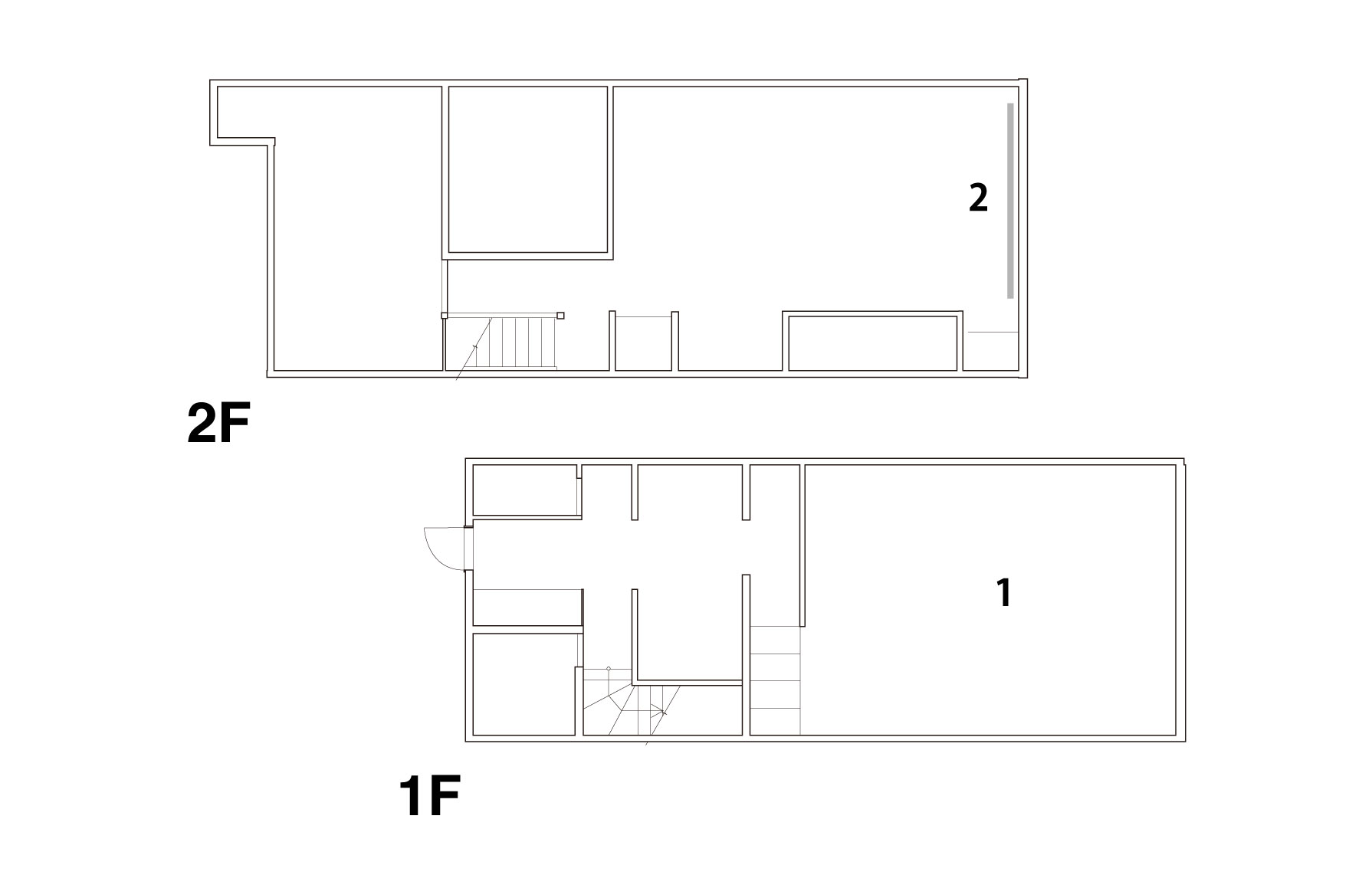
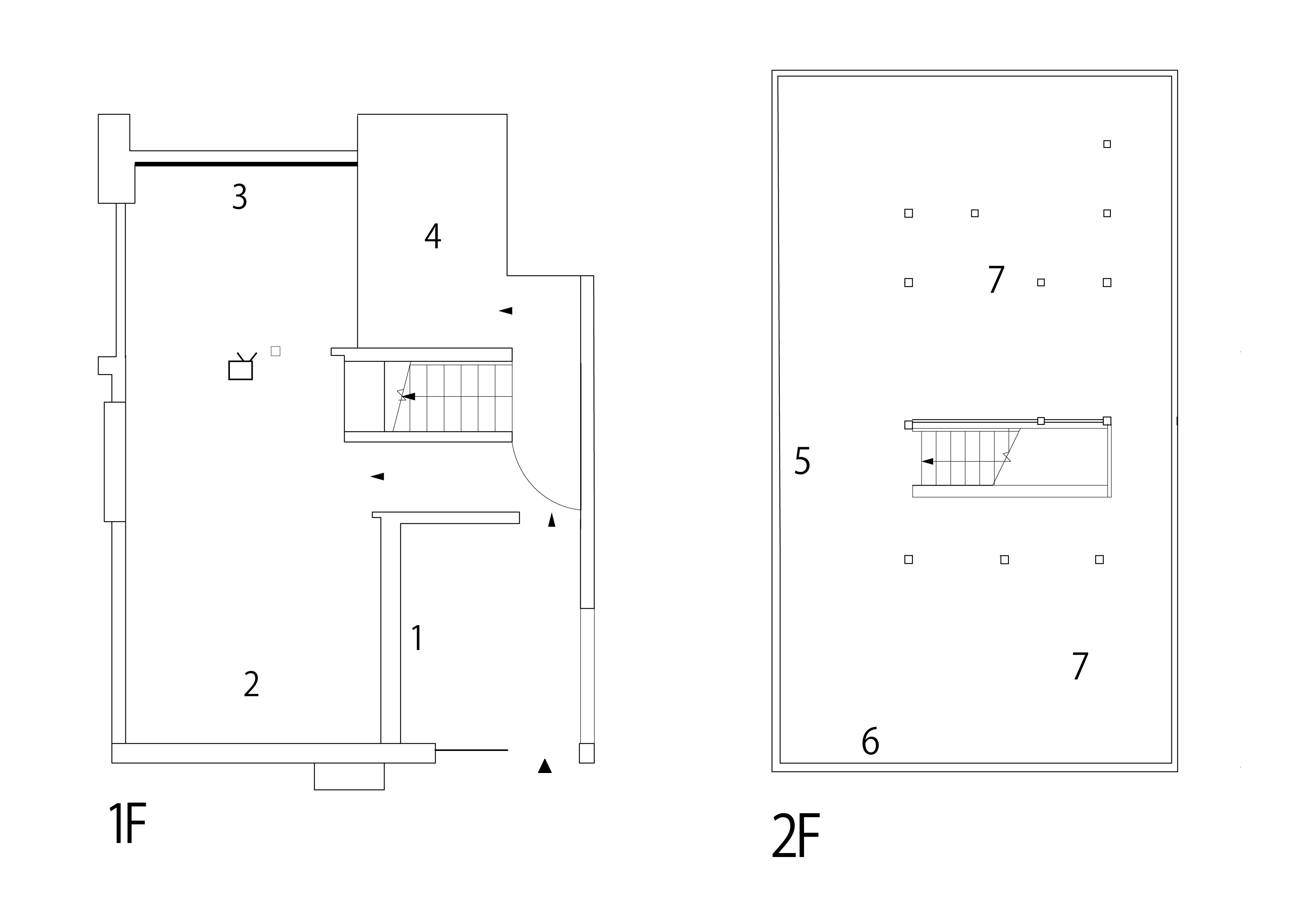
1 Step Three
- Yo Yasuda ⟨⟨Shadow of the wind⟩⟩
2020
cloth, bamboo, grass fiber, video / installation - Gan Siong King ⟨⟨The Koganecho Gesture⟩⟩
2020
video, QR code
30mins loop
Yasuda, who has a strong interest in childhood memories and traditional culture that has been lost due to the digital era, makes sculptures, paintings, photographs, films and installations based on ideas and concepts gathered from people she meets around the world. The idea for this piece came about in 2019, while visiting a friend in Jogjakarta (Indonesia), where she met some eager kite makers. Originally the plan was to visit Indonesia again as part of the residency and do some collaborative kite-making both there and in Koganecho, and when the coronavirus pandemic began a postal collaboration was also attempted, but the work was lost in transport. After many difficulties, the decision was made to present "shadows of the wind" using the warm atmosphere of Kogane studio, and the contrasting colder Step 3. In the midst of a rising awareness of air flow, social distancing and droplet transmission due to the pandemic, the shape of the kite playing in the wind, a symbol of community, brings forth thoughts of places we cannot currently go, while also bringing together a community of people connected through wind and play.
Painter and film maker Gan Siong King takes things that people normally take for granted and draws them from a different perspective, throwing them into question. Unable to travel to take part in the residence due to COVID-19 travel restrictions, he has altered his original plan of creating "Memories of Koganecho" based on local views of "Koganecho", and has instead made a video essay on what it means to "create" under the current circumstances. Starting with past conversations from the past about making art, and comparing what the general public think of as "creation" and "art" with the realities of budgets and creative process, he brings reality into an otherwise fantastical "space in which art is born". Inviting the audience into the role of collaborator, he proposes a project to them and tries to create a new "Audience → Artist → Art → Exhibition" cycle. The "gesture" of this project extending beyond the end of the exhibition period is the artist's response in attempting to sincerely engage with the community, despite not being able to come in person.
2 Hatsune Wing A
Juan Gugger ⟨⟨ALL RIVERS THE RIVER 3⟩⟩
- 2020
- multiple videos, photographs, sketches / installation
Guggar explores sensibilities that are different from the human perspective by creating "ideological objects" in creative and experimental ways. Recent works which have been developed while taking part in AIRs around the world look at the unconscious aspects of buildings and cities. Although his primary art form is sculpture, due to the current travel restrictions and the inability to come to Japan, he has for the first time created a video piece. It was filmed in three locations: Cordoba, where he is based; Villa Tulumba, home to many potters and leather craftsmen; and Buenos Aires. In a time when even domestic travel is more restricted than expected, he reinterprets "movement" and "creativity" that is part of AIRs through growing stones (the Trovants of Romania). The strange shapes of the organically growing Trovants act as a metaphor for the creepiness of things that human typically believe to be inert. In a city quelled by pandemic is the sound of an artificial lake being constructed in Villa Tulumba, a mechanical sound of animals, and a large rock lying in bed. These visual images and sounds that blur the boundary between the organic and inorganic are scattered around a studio in which an artist would usually be working, creating a fictitious space in which non-humans can participate in an AIR, even as the infection spreads.
3 Site-A Gallery beneath the Railways
Alfiah Rahdini ⟨⟨Sailormoonah⟩⟩
- 2020
- video, painted resin sculpture / participatory project
Rahdini questions societal and cultural relationships that exist in public spaces through sculpture and performance. As radicalism increases throughout the world, in Indonesia many artworks (particularly sculptures) have been criticised or boycotted, some even destroyed. On the other hand, there are also individuals who embrace different cultures and mix them with their beliefs. It is in such conditions that Rahdini attempts to highlight the public in areas where people can come into contact with culture. In this piece, a Muslim cosplayer is dressed as a Japanese anime character, wearing a hijab to cover their hair, and clothing with longer sleeves and skirts to cover the skin. Transformed by the culture, and presenting a subject that is not often brought to the forefront, four questions are written into the base of the sculpture: "what would you think if a statue looked like this?", "do you like it, or not?", "is this safe or dangerous?" and "should it be destroyed?". This sculpture-turned-survey has been placed in multiple public spaces around Bandung, where the artist is based, drawing all kinds of responses from passers by.
04 Yamamoto Apartment
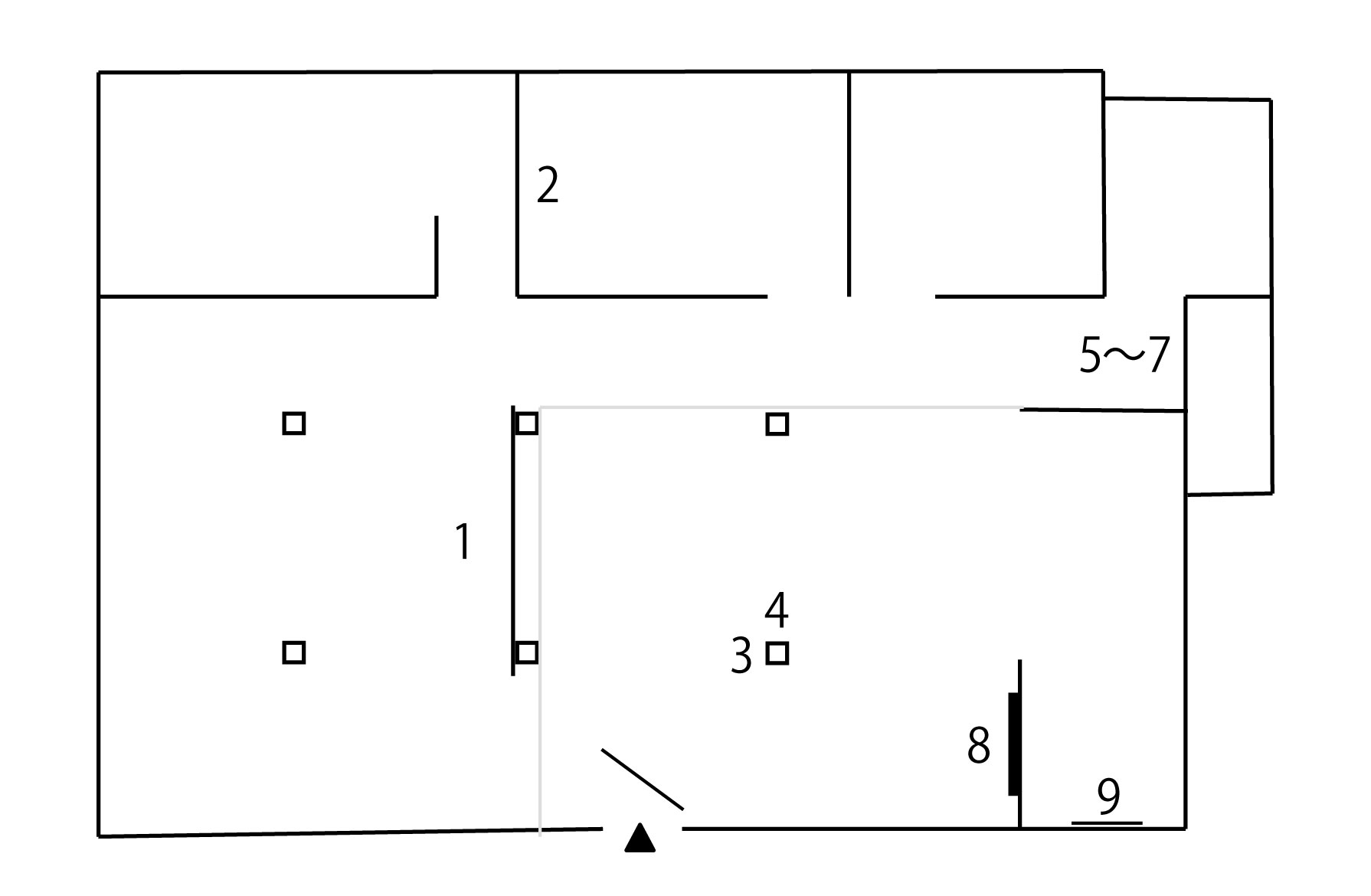
- Tong Wenmin ⟨⟨Fly the Wind⟩⟩
2016
video(5'40 "), Performance(Qinghai Province, China) - Tong Wenmin ⟨⟨Star on the Earth⟩⟩
2016
video(6'11 "), Performance(Bangkok, Thailand) - Tong Wenmin ⟨⟨Reflections-Pine Trees⟩⟩
2017
video(5'00 "), Performance(Chongqing, China) - Tong Wenmin ⟨⟨Hover⟩⟩
2017
video(6'00 "), Performance(Hongbai Town, Sichuan Province, China)
5-7 (from above)
- Tong Wenmin ⟨⟨Lawn⟩⟩
2018
video(5'58 "), Performance(Zhongliang Village, Chongqing, China) - Tong Wenmin ⟨⟨Squid⟩⟩
2019
video(29'38 "), Performance(Dinawan Island, Malaysia) - Tong Wenmin ⟨⟨Plantain Trees⟩⟩
2019
video(6'43 "), Performance(Dinawan Island, Malaysia) - Tong Wenmin ⟨⟨Waves⟩⟩
2019
video(19'46 "), Performance(Dinawan Island, Malaysia) - Tong Wenmin ⟨⟨Flying⟩⟩
2018
video(15'32 "), Performance(Yunnan Province, China)
Wenmin's performance-based pieces explore the meaning between wilderness and modern life, while suggesting at hidden meanings in the body and the actions that occur when it is placed in significant contexts, through simplified repetitive movements. In line with her recent "The Ruin Project", various videos taken in China, Thailand, Malaysia and other places are placed around a venue that is currently under renovation. These works introduce the ways an artist who "thinks with their body" faces the world, by placing the body in these spaces: On a mountain top, with nine stones tied into the artist's hair. Under the stars of a night sky in the countryside, carrying a star made of fluorescent lights. Moving gradually more intensely on burned banana trees. Jumping around town, with the wing of a hawk found under a tower that fell a long time ago. Using visual poetry and seemingly absurd actions, she playfully shows the subtle changes that happen her personal perceptions meet the outside world.
5 Hachibankan
Ralph Lumbres ⟨⟨Bukas: open/tomorrow⟩⟩
- 2020
- mixed media / installation
- ⟨⟨The Cloud is a Spirit 1⟩⟩
2020
inkjet printing
59.4 x 84 cm - ⟨⟨Vessel/Spirit⟩⟩
2020
paper / papier mache, LED light - ⟨⟨The Cloud is a Spirit/Fleeting⟩⟩
2020
single channel video, stereo sound - ⟨⟨Foreshadow/Aninag ng Anino⟩⟩
2020
wood, penlight, paper / installation - ⟨⟨The Cloud is a Spirit 2⟩⟩
2020
inkjet printing
59.4 x 84 cm - ⟨⟨The Cloud is a Spirit Panorama (35°26'42.3"N 139°37'24.0"E)⟩⟩
2020年
inkjet printing
160 x 100 cm - ⟨⟨The Manunggul Jar is a Timecapsule⟩⟩
2020-30
"Manunggul Vase" replica, postcard, wood relief, SSD / installation
A graduate of sculpture, Lumbres' current interest is to combine science and community development with art, organising participatory projects that question the sustainability and resilience of a community. In Tagalog, "Bukas" means "to be open", or "tomorrow". For this project, Lumbres is putting together a time capsule in which the "spirit" of today will be enclosed and sent to the future, to be opened in 2030. The hope is to capture the present with a different approach to historians, through interview, workshop and a participatory installation. Stories by locals about Koganecho in the past and present, as well as their thoughts on the future, have been preserved as data on SSD. In the workshop, participants were asked to think of something they would like to say to someone in 2030, and after creating a sawdust-based relief sculpture, write this message on the back. Visitors to the Koganecho Bazaar installation are encouraged to participate by writing a message on a postcard of the sky, which includes the date and location of where it it was taken. All of these things will be placed in a time capsule that mimics the ancient Philippine Manunggul burial jar discovered in the 1960s, and buried after the end of the exhibition. The plan is to dig this up again in 2030, to screen the interviews on SSD, and to deliver the messages. By creating a setting in which people today can converse with someone in the future, and capturing the "spirit" of the current situation, an opportunity is created to think about a community which transcends time.
6 Mini Gallery
Yoshiko Fujita ⟨⟨Ms. Curtain's Diary⟩⟩
- 2020
- acrylic on canvas, sound, invitation card / installation
- variable size
Fujita began painting young women with curtain drapes over their faces in 2013. This strange and unusual trope asks what kind of communication exists between people when the information we receive through facial expression is shut out. On the premise that an imaginary Ms. Curtain is residing in place of the artist, an installation has been created across two similar looking rooms next to each other. The red room is "lively" and the blue room "a little quiet", expressing the different feelings the artist has within themselves, whilst also drawing a contrast between people directly involved in Koganecho, and those with a more distant relationship. Viewers are given an "invitation", and must choose which room to enter first. The sounds heard inside the space were recorded and edited by the artist during the residency period. A confrontation of artist, artwork, town, or people; by bringing awareness of this, it guides us below surface-level communication.
7 Kogane Studio

- Yo Yasuda ⟨⟨Shadow of the wind⟩⟩
2020
cloth, bamboo, grass fiber, video / installation - RL + NM ⟨⟨The Offering⟩⟩
2020
woodcut and collage on wood
60 x 120 cm - RL + NM ⟨⟨Duality⟩⟩
2020
woodcut and collage on wood
60 x 120 cm - RL + NM ⟨⟨Transits⟩⟩
2020
collage, woodcut print on skateboard deck
84 x 81 cm - RL + NM ⟨⟨Cycles⟩⟩
2020
woodcut print on canvas
194 x 194 cm - RL + NM ⟨⟨Imprinting dreams⟩⟩
2020
woodcut print on canvas
92 x 606 cm - RL + NM ⟨⟨Woodcut Printing Tutorial⟩⟩
2020
video - RL + NM ⟨⟨The all seeing⟩⟩
2020
collage and woodcutprint on paper - RL + NM ⟨⟨Reflecting one⟩⟩
2020
woodcut print and mirror installation
232 x 127 cm
Yasuda, who has a strong interest in childhood memories and traditional culture that has been lost due to the digital era, makes sculptures, paintings, photographs, films and installations based on ideas and concepts gathered from people she meets around the world. The idea for this piece came about in 2019, while visiting a friend in Jogjakarta (Indonesia), where she met some eager kite makers. Originally the plan was to visit Indonesia again as part of the residency and do some collaborative kite-making both there and in Koganecho, and when the coronavirus pandemic began a postal collaboration was also attempted, but the work was lost in transport. After many difficulties, the decision was made to present "shadows of the wind" using the warm atmosphere of Kogane studio, and the contrasting colder Step 3. In the midst of a rising awareness of air flow, social distancing and droplet transmission due to the pandemic, the shape of the kite playing in the wind, a symbol of community, brings forth thoughts of places we cannot currently go, while also bringing together a community of people connected through wind and play.
Rico Leong and Natasha Muin are a collective who use mixed media as a basis for their works. As well as illustrations, woodblock prints (Leong) and photography (Muin), the two also do research and writing. Bringing together the different techniques of woodblock printing and photography to create images, they have been working with a theme of "dualities" suggested by a community: "inside/outside", "continuation/change", "closing/opening", "individual/group". By reinterpreting these as "doubles" rather than as things divided, and looking for where they overlap, they open up the possibilities of "creation involving others". As the artists could not come to Japan to work collaboratively with locals as originally planned due to the current travel restrictions, the format of their work has changed. A woodblock printing video tutorial was produced, and during the first part of the exhibition, up to 10 people a day will be able to take part in a workshop. 50 participants will create a collaborative work across 6m of canvas, which will then be exhibited in the same space. Thus, this "duality" which reevaluates the relationship in which "a pair cannot exist without another" provides an opportunity to make a creative community.
8 Car Park
Haruka Yamada ⟨⟨Nocturne⟩⟩
- 2020
- Stop-motion video (7'27''), 16mm film, color, photographies
- Shooting assistant
Naoki Yoshimoto, Yoshiya Hirayama - Technical and equipment support
Yasuharu Araki (Banri Film)
Yamada, who poetically captures human civilisation, actions and movements in nature, presents her series "Nocturne", which she has been working on since 2014. This is the first time it is presented with 16mm film and photographs. The moon that appears to move along the outline of the city is made using stop motion (a filmmaking technique in which stationary objects are moved in small increments between single camera shots, which then appear to move when played back). It was filmed in time with the moon, which moves about 15 degrees west every hour, whilst changing the angle in relation to buildings, telegraph poles, railroad tracks and signposts. The movement of the moon and the objects of the city guide the viewpoint, playfully unveiling a nighttime silhouette of the town that most (including the artist) don't usually see.